Pet anesthesia and recovery, explained: Big questions. Gentle answers.
Pet anesthesia and recovery, explained step by step. Clear guides for the moments when you need a little reassurance.
Explore the anesthesia guide
From the first question to the way home.
A step-by-step guide to pet anesthesia, pain management, surgery and recovery, with clear, practical information at every stage. Each guide stands on its own, so start with whichever one matches the question in front of you today.
The pre-anesthetic check
A physical exam, a look at the history and often blood work help the team plan the anesthetic around this particular pet, not around an average one.
Preparing for anesthesia
Fasting, water and regular medication: what clinics usually ask for, why the advice differs between patients and what to clarify.
While your pet sleeps
Premedication, induction, maintenance and waking up, in plain language, with what each stage is meant to achieve.
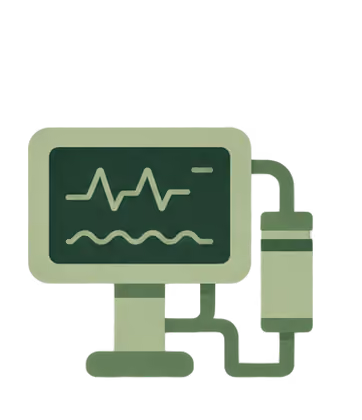
Watching every vital sign
Heart rate, oxygen, CO₂, blood pressure and temperature: what the numbers on the monitor tell the person watching them.
Keeping pain under control
How pain is recognized in animals that cannot describe it, and how a pain plan is put together before, during and after surgery.

Recovering at home
The first evening, the first meal, the wound and the signs that are a reason to call the clinic rather than wait.
There is a whole team behind a peaceful sleep.
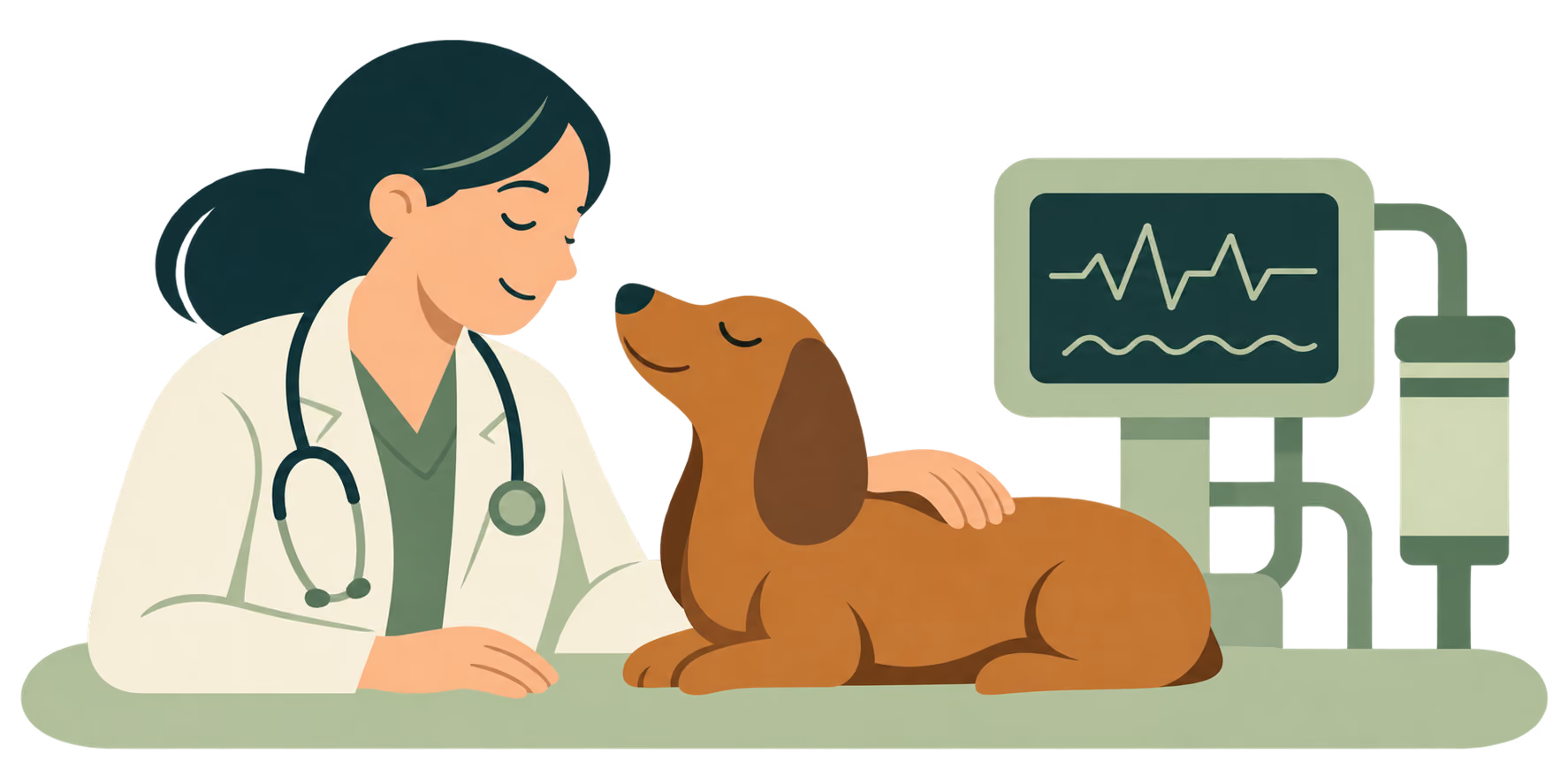
On the day of a procedure, a pet is looked after by more people than most owners ever meet. The vet who examines the patient and plans the anesthetic, the nurse or technician who places the catheter and watches the monitor from the first breath of gas to the moment the breathing tube comes out, the surgeon, and later the person who sits with the patient while it wakes up and keeps it warm. It is worth asking at drop-off who will be watching your pet while it is asleep, and how the clinic will let you know when it is awake again.
Veterinary anesthesiologists are veterinarians who have trained further in anesthesia, pain management and patient monitoring. Most procedures are handled by the general practice team; for a pet with heart, lung or kidney disease, a very young or very old patient, or a complex surgery, it is reasonable to ask the treating vet whether a specialist should be involved.
The same care. A different scale.
Horses need anesthesia, pain management and careful monitoring too. The goals are the same: a safer procedure, less pain and a calm recovery, with an approach that fits a large animal that has to stand up again on its own.
Many short procedures in horses are done standing, under sedation and local anesthetic. When a horse has to lie down, the hardest part often comes at the end, in a padded recovery box where it finds its feet again.
Explore equine anesthesiaFor all the ordinary, extraordinary days.
Most of a pet's life happens far from an operating table. Teeth, weight, vaccines and the slow changes of getting older shape how well a dog or cat copes on the rare day it does need surgery, and they are easier to manage a little at a time, at home and at the yearly check-up.

A long way toward safer sleep.
For most of history, surgery on an animal meant ropes, speed and a strong assistant. The change came in steps, each one making sleep a little more controllable and a little easier to watch. Ether arrived in the 1840s; the monitors that now sit beside almost every anesthetized pet are far more recent than most owners would guess.

Early anesthetics
Ether and chloroform reached animal surgery in the nineteenth century, given with a cloth and a steady hand.
Better techniques
Injectable drugs, breathing tubes and gas machines made the depth of anesthesia adjustable.

Specialist knowledge
Anesthesia became a veterinary specialty of its own, with residencies, exams and published guidelines.
Modern monitoring
Pulse oximetry, capnography and blood pressure readings now show trouble minutes before it is visible.
A few things you might be wondering.
Will my pet be asleep the whole time?
Under general anesthesia, yes: the drugs keep the pet unconscious and still until the procedure is finished. Some short procedures use sedation instead, where the pet is deeply relaxed but not fully unconscious. The clinic can say which one is planned and why.
Read how anesthesia works, step by stepWhy is fasting sometimes needed?
Anesthesia relaxes the reflexes that normally protect the airway, so a full stomach raises the chance of regurgitation. How long a pet should go without food depends on the species, age, health and the procedure, which is why the clinic's own instructions come first.
Read about fasting before anesthesiaWhat does the team monitor?
Usually heart rate and rhythm, breathing, oxygen saturation, exhaled carbon dioxide, blood pressure and body temperature, together with reflexes and jaw tone that show how deep the anesthesia is.
Read about anesthesia monitoringHow is pain managed after surgery?
Most pain plans start before the first cut and combine several approaches, such as local blocks and medication given at intervals. At home, owners follow the written plan and watch for signs that it is not enough.
Read about pain managementWhat should I watch for at home?
Some sleepiness on the first evening is expected. Breathing that looks labored, pale gums, bleeding, a wound that opens, repeated vomiting or a pet that cannot be roused are reasons to call the clinic straight away.
Read about the first hours after anesthesia